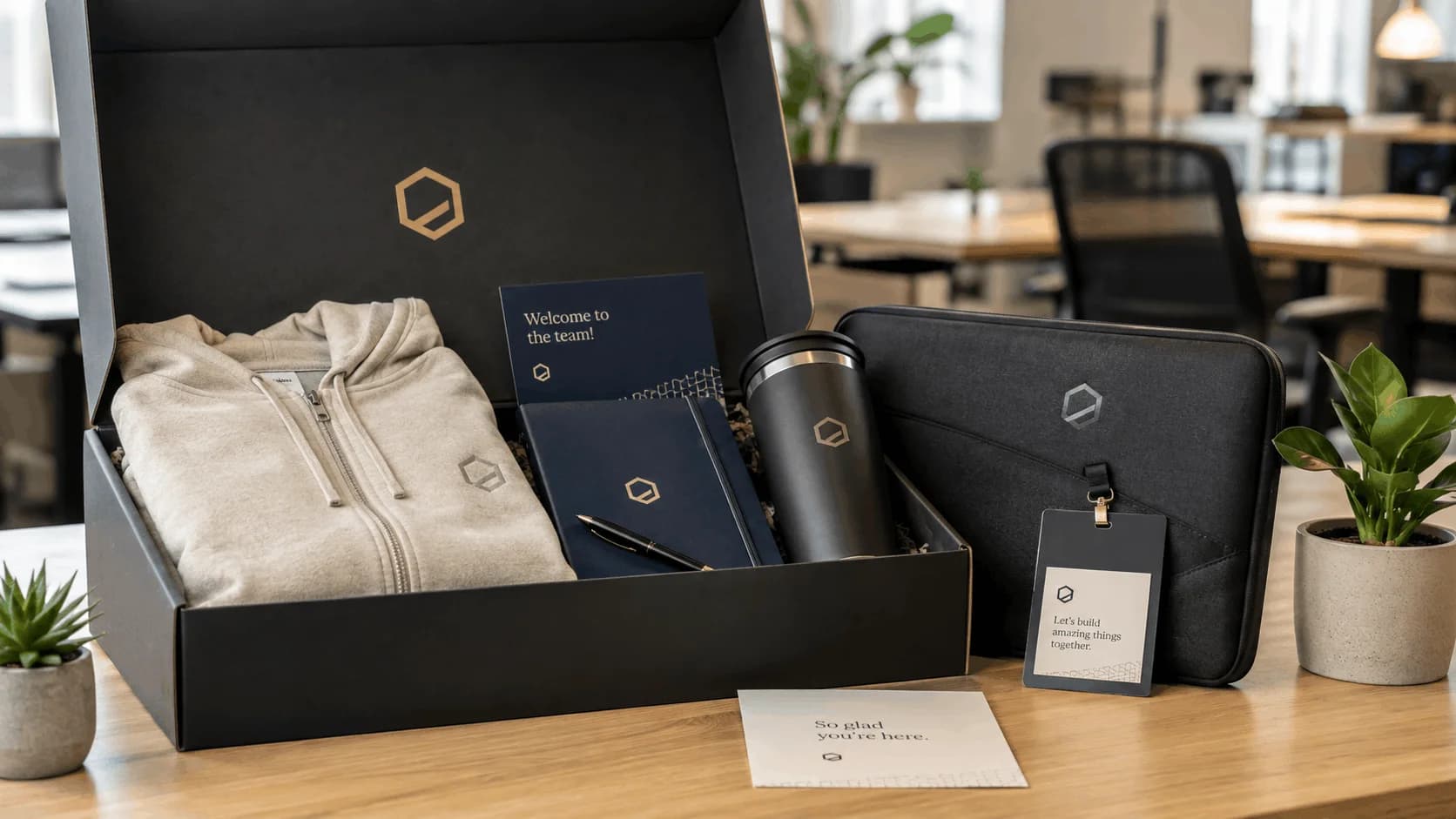
New Hire Welcome Kits Employees Actually Want to Keep
August 27, 2026
Starting a new job comes with a lot to absorb: new names, new systems, new expectations, and a new routine. A thoughtful welcome kit can make that first day feel a little easier.
The best new hire welcome kits are not packed with random promotional items. They are practical, useful, and designed around what the employee will actually need.
A good kit should help someone feel prepared, included, and appreciated without looking like a box of leftover company swag.
Here is what is worth putting inside.
What Should New Hire Welcome Kits Include?
A strong welcome kit usually combines four things:
- One quality apparel item
- One useful everyday product
- One role-specific item
- One personal touch
You do not need ten or fifteen products to make the kit feel valuable.
In many cases, three or four well-chosen items create a better first impression than a box filled with inexpensive items that employees may never use.
The goal is simple: give people things that make sense for their first week and still feel useful months later.
Start With Apparel They Will Actually Wear
Branded apparel is one of the easiest ways to help a new employee feel like part of the team.
But the garment matters.
A stiff, poorly fitting shirt with an oversized logo is unlikely to become anyone's favorite. A comfortable T-shirt, polo, hoodie, quarter-zip, jacket, or hat has a much better chance of becoming part of their regular rotation.
Choose the garment based on the workplace.
A casual office may prefer soft T-shirts or hoodies. Customer-facing employees may need polos or lightweight jackets. Outdoor teams may benefit from hats, performance shirts, or durable layers.
Keep the branding clean.
A small embroidered chest logo or subtle printed mark can often feel more wearable than a large promotional design.
If employees enjoy wearing the item outside work, the company gets more value from it too.
Include Something Useful Every Day
The second item should be something the employee can use regularly.
Good options include:
- Reusable water bottles
- Coffee tumblers
- Notebooks
- Backpacks
- Tote bags
- Laptop sleeves
- Desk accessories
The right choice depends on how your team works.
Remote employees might appreciate a notebook, tumbler, or laptop accessory. Field employees may benefit more from a durable bag or insulated drinkware.
Before adding anything, ask one question:
Will this make the employee's workday easier or more comfortable?
If the answer is no, it may not belong in the kit.
Think About the Employee's Role
A welcome kit becomes more useful when it reflects the actual job.
A salesperson who travels often has different needs from a warehouse employee. A construction crew member does not need the same products as someone working from home.
Instead of creating one identical kit for everyone, consider building a core kit and changing one or two items based on the role.
For example:
Office employees: polo, notebook, tumbler
Remote employees: hoodie, notebook, laptop sleeve
Field employees: performance shirt, hat, insulated bottle
Sales teams: quarter-zip, travel mug, backpack
Seasonal employees: T-shirt, water bottle, practical work item
This keeps your brand consistent while making the kit more relevant.
One Better Product Can Beat Several Cheap Ones
Welcome kits often become cluttered because companies want the box to look full.
That can lead to unnecessary items such as low-quality pens, keychains, plastic gadgets, or products with no real connection to the employee's job.
There is nothing wrong with including small promotional items when they are useful.
The problem is adding them only to increase the item count.
A quality hoodie and a good tumbler may create a stronger impression than six inexpensive products.
Fewer items can also make the kit feel more intentional.
Spend the budget on products employees are likely to keep.
Get Apparel Sizes Right Before Day One
If the welcome kit includes clothing, collect the employee's size before ordering or packing the kit.
Do not guess.
Sizing can vary between apparel brands, so it helps to provide a size chart for the exact garment.
For companies hiring regularly, keeping a small inventory of common sizes can make onboarding easier. Just make sure the range is broad enough to accommodate different employees comfortably.
A welcome gift should feel welcoming.
Receiving a shirt that does not fit creates the opposite experience.
Add Something Personal
Not everything in the box needs a logo.
A handwritten note from the manager can be one of the most meaningful items in the entire kit.
It could simply welcome the employee, mention what the team is looking forward to, or explain what to expect during the first few days.
Other personal additions could include:
- A local coffee shop gift card
- A team photo
- A favorite office snack
- A short guide to the neighborhood
- Recommendations from coworkers
- A small product connected to company culture
These details make the kit feel like it came from people rather than a purchasing department.
Keep the Branding Subtle
A welcome kit should represent the company without turning every item into an advertisement.
You do not need the largest possible logo on every product.
Sometimes a smaller mark makes the item more appealing.
This is especially true for apparel. Employees are more likely to wear company clothing outside work when it looks like something they would normally choose.
Think about how the logo fits the product rather than simply how visible you can make it.
Good branding should feel intentional.
Make the Packaging Feel Organized
Presentation matters, but you do not need expensive custom packaging.
A clean box with neatly arranged products can work perfectly well.
Fold apparel properly. Protect drinkware. Keep the welcome card visible when the box is opened. Avoid oversized packaging filled with unnecessary paper or filler.
If you are shipping to remote employees, make sure everything is packed securely enough to arrive in good condition.
The products inside the kit should receive most of the attention and budget.
Plan for Future Hires
If your company hires throughout the year, document the kit once you find a combination that works.
Keep track of:
- Apparel brand and style
- Garment colors
- Logo files
- Decoration placement
- Approved products
- Available sizes
- Packaging details
This makes future orders easier and keeps the experience consistent.
It also prevents the kit from changing randomly depending on who happens to place the next order.
Final Thoughts
The best new hire welcome kits are built around the employee, not the number of products you can fit inside a box.
Start with quality apparel they will actually wear. Add one or two useful items that fit their workday. Include something personal, keep the branding tasteful, and avoid adding products simply to make the kit look bigger.
A welcome kit does not need to be extravagant to make an impression.
It just needs to show that someone thought about the person opening it.
Frequently Asked Questions
How many items should be in a new hire welcome kit?
There is no required number. Three to five useful items are often enough to create a thoughtful kit without filling it with unnecessary products.
What is the best branded item for a new employee?
A quality piece of apparel is one of the most versatile choices because it helps employees feel connected to the team and can be worn repeatedly.
Should every employee receive the same welcome kit?
Not necessarily. A consistent core kit works well, but changing one or two items based on department, job role, work environment, or location can make it more useful.
Are expensive welcome kits better?
Not automatically. A smaller kit containing useful, well-made products can create a better experience than a larger kit filled with inexpensive items.