Print vs. Embroidery: Which Is Right for Your Custom Apparel?
July 17, 2026
Choosing custom apparel involves more than selecting a shirt, uploading a logo, and choosing a color.
You also need to decide how the design will be added to the garment.
Should you choose printing or embroidery?
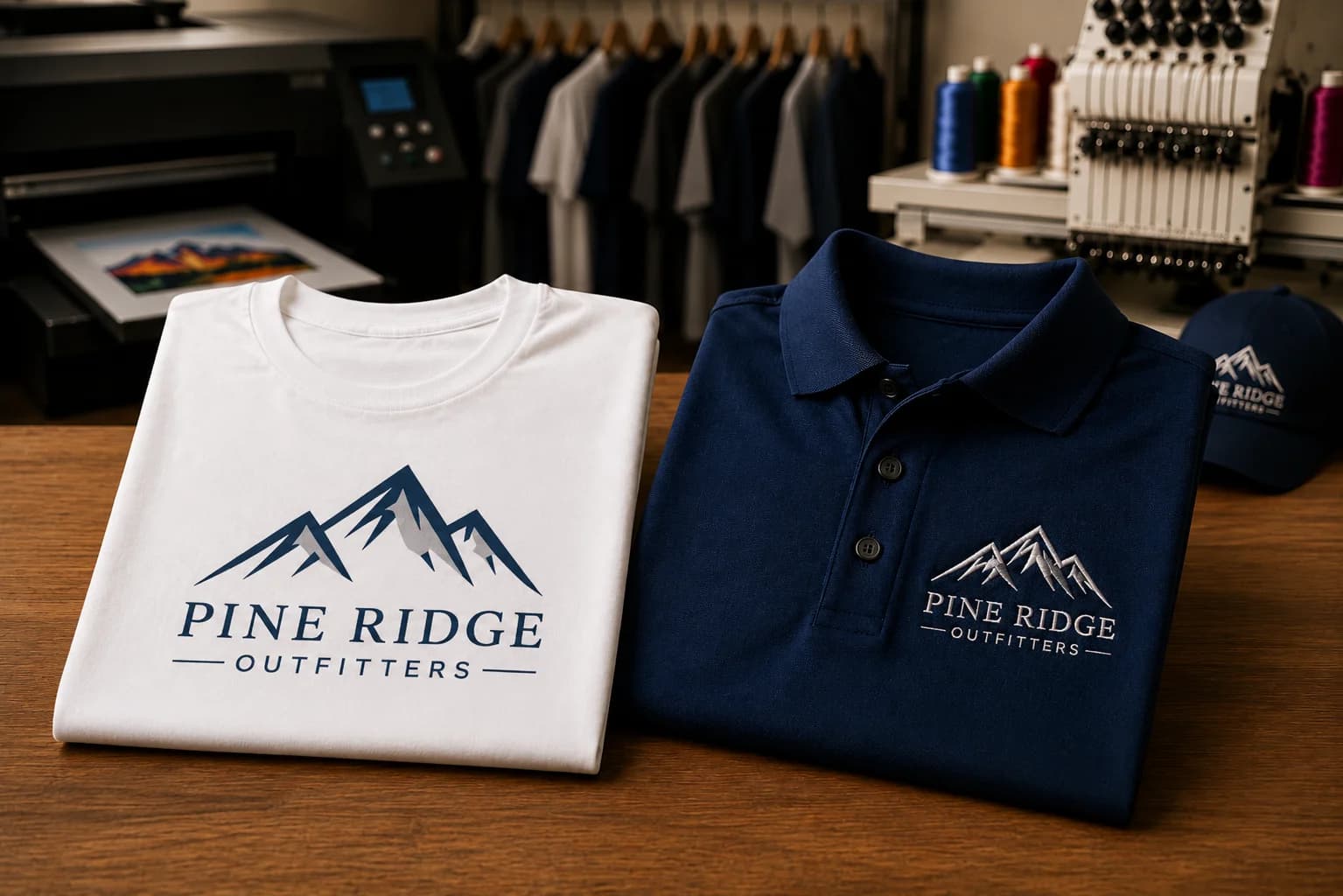
Both methods can create professional custom apparel, but they produce different results. Printing is often better for colorful artwork, detailed graphics, large designs, and everyday shirts. Embroidery creates a raised, textured finish that works especially well on polos, hats, jackets, uniforms, and professional workwear.
At Print Oracle, printing includes DTF, or Direct to Film, and DTG, or Direct to Garment. Both are types of printing. Embroidery uses thread stitched directly into the fabric.
The right choice depends on the garment, artwork, fabric, design size, placement, budget, and how the apparel will be used.
This guide explains the difference between print and embroidery and how to choose the right option for your custom apparel.
What Is Custom Apparel Printing?
Custom apparel printing applies artwork to the surface of a garment.
Printing can reproduce full-color designs, fine lines, gradients, illustrations, photographs, small text, and large front or back graphics. This makes it a flexible option for business shirts, event apparel, branded merchandise, team clothing, hoodies, and promotional products.
DTF stands for Direct to Film. The design is printed onto a special film and transferred to the garment using heat and pressure. DTF works well across many cotton, polyester, and blended garments.
DTG stands for Direct to Garment. Specialized ink is applied directly to the fabric. DTG is often used for detailed, full-color artwork on suitable cotton and high-cotton shirts.
What Is Embroidery?
Embroidery creates a design by stitching thread directly into the garment.
The finished design has a raised, textured appearance. It often looks more structured and polished than a printed design, which is why embroidery is commonly used for company logos, employee names, uniforms, polos, hats, jackets, aprons, and corporate apparel.
Embroidery works best with clean designs, clear lettering, defined shapes, and smaller logo placements.
A simple company logo can look excellent when embroidered on the left chest of a polo. However, photographs, gradients, tiny text, and highly detailed illustrations may not translate clearly into thread.
The artwork may need to be simplified before it can be embroidered successfully.
Print vs. Embroidery: What Is the Real Difference?
The main difference is how the design becomes part of the garment.
Printing places artwork on the fabric’s surface. Embroidery builds the design with thread stitched into the material.
That difference affects the appearance, texture, comfort, detail, placement, durability, and overall style of the finished apparel.
Printed designs usually look smooth, colorful, and graphic. Embroidered designs look dimensional, textured, and professional.
A large, colorful event design may look better when printed. A simple company logo on a polo may look stronger when embroidered.
Which Method Handles Detailed Designs Better?
Printing usually provides more flexibility for detailed artwork.
DTF and DTG can reproduce multiple colors, fine lines, gradients, small design elements, illustrations, and photographic images. This makes printing a strong choice when the artwork contains details that would be difficult to recreate with thread.
Embroidery is more effective when the artwork is simple and clearly defined.
Logos with bold lettering, clean shapes, and limited fine detail often embroider well. Very small text, thin lines, shadows, and subtle color changes may become difficult to see once the design is converted into stitches.
If a logo is too complex, it may need a simplified embroidery version so the design remains clear and recognizable.
Which Method Is Better for Different Garments?
Printing is usually the better choice for custom T-shirts.
T-shirts are lightweight and flexible. DTF and DTG can add detailed artwork without creating the weight or stiffness that may come from a large embroidered area. Printing also provides more freedom for front graphics, back designs, promotional messages, and full-color artwork.
Embroidery can still work on a T-shirt when the design is small and the fabric is strong enough to support it. However, a large embroidered design can feel heavy on a lightweight tee.
Embroidery is often the preferred choice for custom polos. Polos already have a structured and professional appearance, and an embroidered left-chest logo complements that style.
Hats and jackets also work well with embroidery. A clean embroidered logo can give a cap a professional appearance, while the heavier material of many jackets can support stitching better than a lightweight shirt.
Printing may still suit some polos and jackets when the design is large or highly detailed. The fabric and garment construction should always be reviewed first.
How Does Fabric Affect the Decision?
Fabric plays an important role in choosing between print and embroidery.
DTF is a versatile option that can work across many cotton, polyester, and blended garments. This makes it useful for orders that include several apparel types.
DTG often performs best on suitable cotton and high-cotton garments. Because the ink is applied directly to the fabric, garment quality and material composition can affect the final appearance.
Embroidery usually works best on fabrics that can support the weight and movement of the stitches. Polos, jackets, hats, structured work shirts, sweatshirts, and bags are often suitable choices.
Lightweight, thin, delicate, or highly stretchy fabrics may pull or pucker if the embroidered design is too large or dense.
Which Method Feels More Comfortable?
The feel of the design depends on its size, location, production method, and garment.
DTG can create a relatively soft print, especially on suitable cotton apparel. DTF creates a smooth and defined design on the garment’s surface.
A small printed logo may barely affect the feel of the shirt. A large design with heavy color coverage may feel more noticeable.
Embroidery has a raised texture because thread passes through the fabric. On a polo, hat, or jacket, that texture usually feels natural. On a thin T-shirt, a large embroidered design may feel heavier or stiffer.
For large designs and lightweight apparel, printing is generally more comfortable. For small logos on structured garments, embroidery usually works well.
Is Print or Embroidery More Durable?
Both methods can be durable when the correct process is used and the garment is cared for properly.
Embroidery is known for long-lasting performance because the design is stitched into the fabric. This makes it a popular choice for workwear, uniforms, hats, and apparel that will be worn regularly.
Quality DTF and DTG printing can also hold up well through repeated wear and washing.
Printed apparel should be washed according to the garment care instructions. Turning the item inside out, avoiding excessive heat, and using appropriate washing conditions can help protect the design.
Embroidery also requires proper care. Loose threads should not be pulled, and harsh washing or drying conditions may affect both the stitching and the garment.
How Do Design Size and Placement Affect the Choice?
Printing is usually more suitable for large designs.
A full-front graphic, large back logo, event message, illustration, or sponsor layout can be printed without making the garment excessively heavy.
A large embroidered design requires many stitches. This can increase the weight, stiffness, production time, and cost of the garment.
Embroidery is generally better for smaller placements such as a left-chest logo, sleeve mark, employee name, or hat design.
A useful guideline is simple:
Choose printing for large or detailed artwork.
Choose embroidery for smaller, professional branding.
How Does Cost Compare?
There is no fixed rule that printing is always cheaper or embroidery is always more expensive.
The final price depends on the garment, quantity, design size, placement, artwork, personalization, and production requirements.
Printing costs may be influenced by the size of the design, fabric type, garment color, number of print locations, and whether DTF or DTG is used.
Embroidery pricing is often affected by stitch count. A larger or more detailed design requires more thread, more machine time, and additional artwork preparation.
Adding individual employee names may also increase the price because each garment requires unique production.
The lowest price should not be the only consideration. A less expensive method may not provide good value if it does not suit the fabric, artwork, or intended use.
When DTF, DTG, or Embroidery Makes Sense
DTF is a strong choice when an order includes several fabric types or needs bright, detailed artwork across different garments. It works well for business shirts, hoodies, team apparel, workwear, and promotional products.
DTG is often the better option for detailed artwork, gradients, photographic elements, and subtle color changes on suitable cotton or high-cotton garments.
Embroidery is usually the stronger option when the apparel needs a polished and uniform appearance. It works especially well for simple logos, employee names, polos, hats, jackets, work shirts, aprons, and corporate apparel.
Some businesses use more than one method. They may choose printed T-shirts for event staff, embroidered polos for customer-facing employees, and embroidered hats or jackets for the wider team.
Using both methods can create a consistent brand appearance while allowing each garment to use the option that works best.
Common Mistakes to Avoid
Avoid choosing embroidery for highly detailed artwork or placing a large, dense stitched design on a lightweight shirt. Also, do not assume DTF and DTG perform the same way on every fabric.
The right method should support the garment, artwork, and intended use-not simply produce the lowest quote.
How to Choose the Right Method for Your Order
Start by looking at the garment.
T-shirts and hoodies often work well with printing. Polos, hats, jackets, and structured uniforms often work well with embroidery.
Next, review the artwork.
Detailed, colorful, or large designs are usually better suited to DTF or DTG. Simple logos and short employee names often work well as embroidery.
Then consider where and how the apparel will be used.
A company uniform worn in front of customers may benefit from embroidery. A promotional shirt, event design, or branded merchandise product may benefit from printing.
Finally, think about comfort, durability, quantity, placement, and budget.
The best decision is the one that balances all of these factors rather than focusing on only one.
Final Thoughts
The decision between print vs. embroidery depends on the garment, artwork, placement, and purpose of the order.
Printing provides more flexibility for colorful designs, detailed graphics, large artwork, event apparel, branded merchandise, and custom T-shirts. DTF is a versatile option across many fabrics, while DTG works especially well for detailed artwork on suitable cotton garments.
Embroidery creates a textured and professional finish that is often preferred for polos, hats, jackets, uniforms, and customer-facing company apparel.
Neither method is always better.
A large, colorful design may look best when printed. A clean company logo may look more polished when embroidered. Some apparel programs may need both methods.
The right custom apparel method should support the design, suit the fabric, feel comfortable, and represent the brand appropriately.
Before placing an order, review the garment type, artwork detail, design size, placement, intended use, and desired appearance. Making the right choice at the beginning can help produce custom apparel that looks professional and serves its purpose well.
Frequently Asked Questions
Is Printing or Embroidery Better for Custom Apparel?
Printing is usually better for detailed, colorful, or large designs. Embroidery is often better for smaller professional logos on polos, hats, jackets, uniforms, and structured workwear.
What Is the Difference Between DTF and DTG?
DTF prints the design onto film before transferring it to the garment. DTG applies ink directly to a suitable garment. DTF works across a wider variety of fabrics, while DTG is often used for detailed designs on cotton and high-cotton apparel.
Is Embroidery Better for Company Logos?
Embroidery is a strong choice for simple company logos placed on polos, hats, jackets, or uniforms. Detailed or highly colorful logos may reproduce more accurately with printing.
Is Printing Better for Custom T-Shirts?
Printing is usually the more practical option for custom T-shirts because it supports large designs, detailed graphics, and full-color artwork without adding the weight of a large stitched area.
Can Printing and Embroidery Be Used in the Same Order?
Yes. A business may order printed T-shirts and hoodies along with embroidered polos, hats, or jackets. Some garments may also use embroidery on the front and printing on the back.